Key takeaways
A complete motorcycle insurance policy will combine these coverages based on your needs and legal requirements. Here are some key takeaways before we dive deeper into this policy.
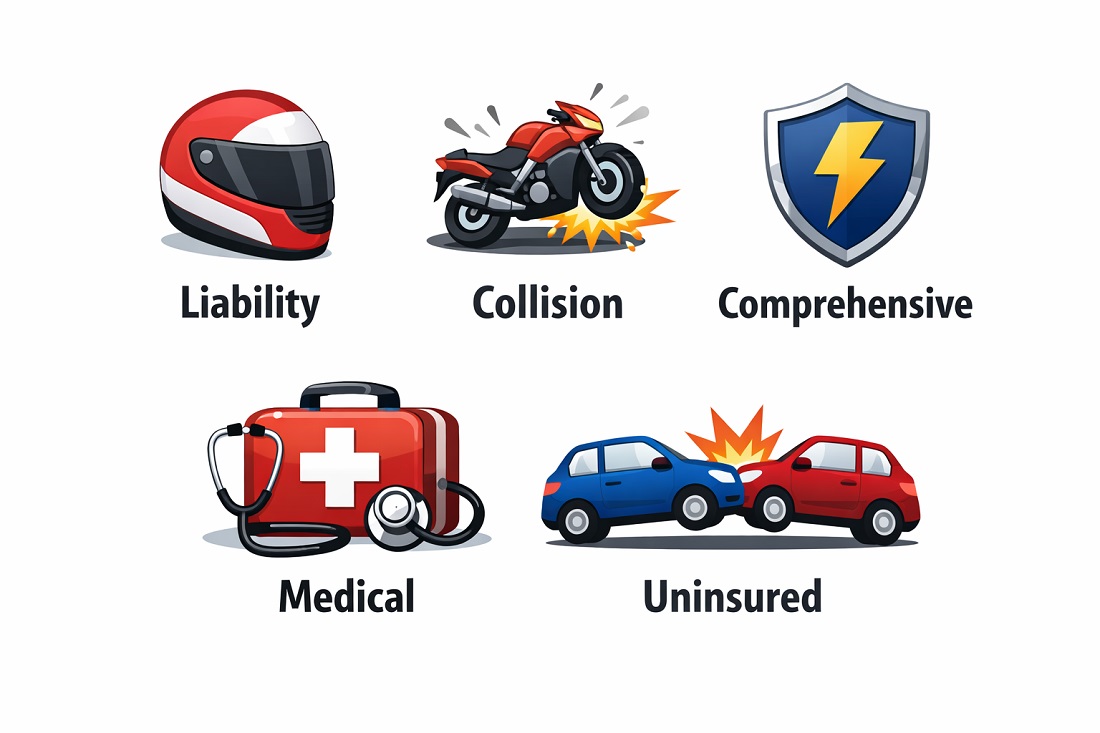
- Liability coverage: Pays for other person’s injuries or property damage if you’re at fault. Required in every state.
- Collision coverage: Pays to repair or replace your motorcycle if it’s damaged in a crash.
- Comprehensive coverage: Pays for non-crash losses like theft, fire, or natural disaster.
- Personal injury protection (PIP) / Medical payments: Pays for you and your passenger’s medical costs after a crash, regardless of who caused it. Availability varies by state.
- Uninsured/Underinsured motorist: Pays your losses if you’re hit by someone with no or inadequate insurance.
Let’s take a close look at each type of coverage and what it exactly includes.
Liability coverage
Liability coverage is the core of any policy and mainly contains two parts: bodily injury and property damage.
- Bodily injury liability: This is applicable if you hurt someone in an accident. It pays their medical bills, lost wages, and legal fees up to your limit.
- Property damage liability: This is self explanatory and covers repairs to other people’s property such as their car or fence that you damaged during an accident.
Here’s a quick example: If you crash your bike into a car, your liability covers the other driver’s costs. Your own injuries or bike damage would not be covered by your liability insurance.
Legal Note: Every state requires minimum liability coverage for motorcycles. Riding without it is risky and not recommended as it can result in fines or license suspension.
Collision coverage
Collision insurance covers damage to your own bike from a crash, regardless of fault. This is generally applicable If you collide with another vehicle or object such as a tree, wall or fence, collision pays to fix or replace your bike.
Its is important for protecting a valuable bike or if you have a loan. Lenders often require collision coverage.
Without collision, you’d have to pay out-of-pocket to repair your own bike. Most people carry it if their bike is relatively new or expensive.
Comprehensive coverage
Comprehensive (often called “Comp”) covers non-collision events such as:
- Theft: If your bike is stolen, comprehensive pays to replace it. Keep in mind, depending on the policy, there might be some deductible.
- Vandalism or fire: Damage from vandalism, fire, falling objects, like a tree branch, flood or hail is covered.
- Hit by an animal: If you hit a deer, comprehensive applies.
Comprehensive is optional and not required by law but highly recommended if you have a valuable bike, live in a high-theft area, or plan to store your bike. If you currently live in a high risk area, some lenders require comp even then.
Personal Injury Protection (PIP) / Medical payments
In states without PIP, MedPay serves a similar role. These coverages can fill gaps that health insurance might not cover, and ensure riders aren’t stuck with large hospital bills after a crash.
- Medical payments coverage: This is an optional add-on. It pays your medical bills and passenger’s from a bike accident, regardless of who’s at fault. It typically has a limit ranging around $5k to $10k.
- Personal Injury Protection (PIP): This type of protection is only offered in some states like Florida or as an added extra. It covers a broad range of accident-related costs (medical, lost wages, rehab) up to a limit, for you and your passenger, regardless of fault.
Uninsured/Underinsured motorist (UM/UIM)
This optional coverage protects you if you’re hit by a driver who has no insurance or not enough insurance. Given many drivers are uninsured, UM/UIM is very valuable. It’s often mandatory or highly encouraged in many states. Here’s how it works:
- Uninsured motorist: Pays your medical bills and sometimes vehicle repair if another driver hits you and lacks insurance.
- Underinsured motorist: Kicks in when the at-fault party’s insurance isn’t sufficient to cover your losses; your UM/UIM pays the remainder up to your limits.
Optional add-ons
Depending on insurer, you might see the following add-ons available. It’s probably best to speak to your insurance broker to determine whether you really need any of these and what the cost might be.
- Roadside assistance: Towing or labor if your bike breaks down.
- Custom parts coverage: For expensive mods or aftermarket parts.
- Rental reimbursement: Pays to rent a bike while yours is repaired after a covered claim.
Summary
A typical full coverage motorcycle policy would include: Liability + Collision + Comprehensive + UM/UIM + PIP/MedPay. Every rider should at minimum carry strong liability limits to meet state laws. The other coverages protect you and your bike in specific situations.
Always compare coverages and limits. An independent agent can help ensure you have all the necessary types of coverage for your situation. The last thing you want is to get into an accident without the right coverage as it’s nothing less than a nightmare!
For alternative motorcycle insurance over shorter periods, don’t forget to take a look at our one day insurance guide here: onedaybikeinsurancecover.com