Third-party motorcycle insurance, also known as liability cover, is the most basic level of motorcycle insurance. It protects you financially if you cause damage to another person’s vehicle, property, or if you injure someone in an accident. It is designed to cover other people’s losses, not your own.
Key takeaways
- Third-party insurance is essentially liability insurance for motorcycles. It pays for the other party’s injuries or property damage when you’re at fault.
- This coverage does not protect your own bike or injuries. It only covers the “third party”, the other driver or property owner, in an accident you cause.
- Third-party liability insurance is required by law in all U.S. states. Riding without it carries legal penalties (fines, license suspension).
- Limits should be high enough to cover serious accidents; minimum state limits are often too low for major crashes.
What does “liability” mean in motorcycle insurance?
Liability refers to your legal responsibility for damage or injury caused to other people. If you are at fault in an accident, you are responsible for covering the costs. Third-party insurance exists to cover this liability. It pays for damage to other vehicles, property, or injuries, as you don’t have to pay out of pocket.
If you are involved in an accident and are found to be at fault, liability insurance covers the costs associated with:
- Repairing the other person’s vehicle
- Damage to property (such as fences, buildings, or road signs)
- Medical expenses for injured third parties
- Legal costs if a claim is made against you
This is why third-party insurance is often called liability insurance, they are essentially the same thing.
What does third-party cover?
Third-party motorcycle insurance includes:
- Bodily injury liability: Pays medical expenses, lost wages, and legal costs for people you injure in an at-fault crash.
- Property damage liability: Pays to repair or replace damage you cause to other people’s property (cars, fences, etc.).
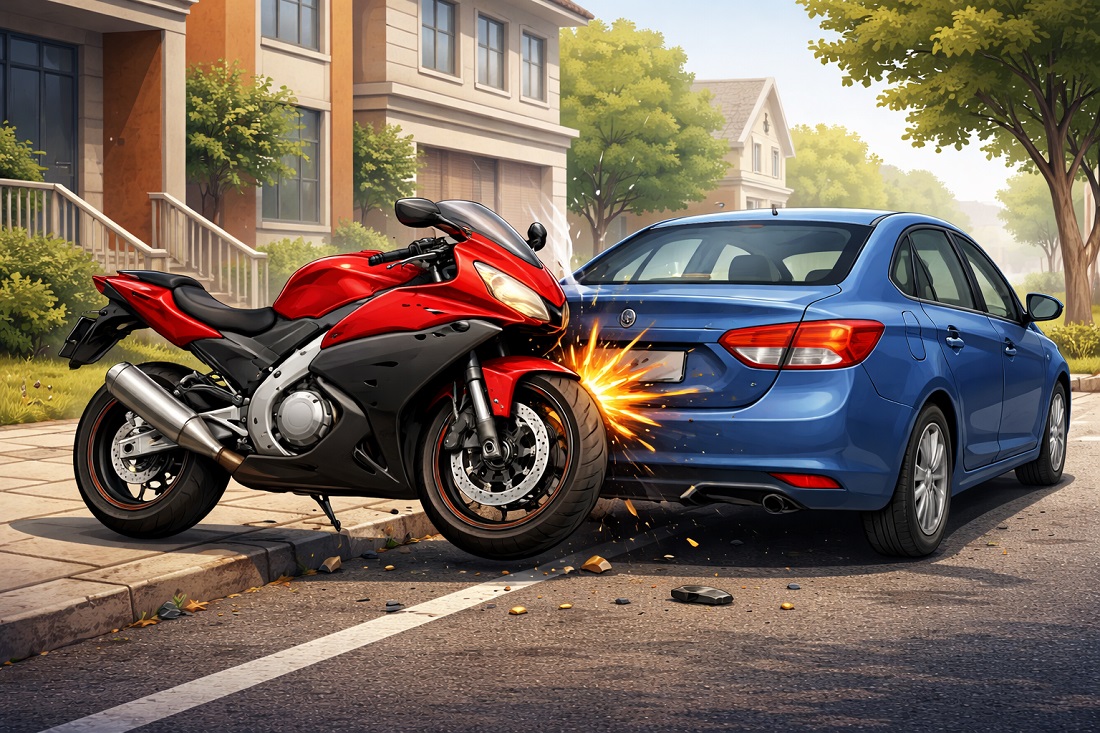
For example, if you rear-end another car, third-party liability will cover that car’s damages and the driver’s medical bills. It won’t pay for damages to your bike, nor your own medical bills.
Limits and requirements
- Each state has minimum liability limits (e.g., $25,000 bodily injury per person/$50,000 per accident, $25,000 property damage). However, these minimums are often quite low; many experts advise higher limits (e.g. $100k per person).
- Liability-only insurance (third-party only) is the cheapest policy you can buy, but also the riskiest for you personally. It only helps others, not you.
- If involved in a very costly accident, liability limits might be exhausted, and you could be sued personally for amounts beyond your coverage.
Benefits and limitations
Benefits:
– Keeps you legal as per state requirements.
– Very low premium compared to full coverage policies. Good for old bikes or very budget-conscious riders.
Limitations:
– No protection for your bike or yourself. If the accident is your fault, you cover all your costs.
– Doesn’t cover medical expenses for you or your passenger. This is where uninsured motorist coverage can protect you if the other rider is at fault and uninsured.
– You are fully at-risk for your own damage.
Why liability cover is important
Even a small accident can result in expensive claims. Without third-party insurance, you would be responsible for paying:
- Vehicle repairs
- Property damage
- Medical costs
- Legal fees
These costs can be significant. Third-party insurance protects you from having to pay them out of pocket.
Third-party vs comprehensive motorcycle insurance
Third-party insurance is cheaper because it offers less protection. Comprehensive insurance covers both you and others. Here is a quick comparison between the two:
| Feature | Third-party | Comprehensive |
|---|---|---|
| Covers damage to others | Yes | Yes |
| Covers your motorcycle | No | Yes |
| Covers theft | No | Yes |
| Cost | Lower | Higher |
Example scenarios
-You hit another car → your insurance pays for their repairs
-You damage someone’s gate → your insurance covers the cost
-You injure a pedestrian → your insurance may cover medical expenses
Recommendation
Given the high costs of accidents, liability limits above the state minimum are wise. If you have any loan or savings to protect, consider broader coverage. But if you’re riding an old bike and don’t mind risk, third-party coverage is the legal minimum.
Frequently Asked Questions
Is third-party insurance the same as liability insurance?
-Yes, both terms refer to the same type of cover.
Is third-party insurance enough?
-It depends on your needs. It protects others, but not your own motorcycle.
Is third-party insurance cheaper?
-Yes, it is usually the most affordable option.