Key takeaways
- Temporary or one-day motorcycle insurance provides coverage for very short periods, sometimes as little as a single day or 24 hours.
- This type of policy is ideal for occasional riding scenarios such as rentals, vacations, or borrowing a motorcycle.
- Coverage normally includes liability insurance required by most U.S. states and may also include optional collision or comprehensive protection.
- Many short-term policies are arranged through rental agencies or specialty brokers since major insurance giants rarely offer one-day plans.
- Short-term coverage often costs more per day than annual policies, but riders only pay for the time they actually need.
- Always confirm you have minimum liability on any bike you ride.
What is One Day Motorcycle Insurance?
One day motorcycle insurance, also called temporary motorcycle insurance, is a short-term policy that covers a motorcycle rider for a limited period. It can be a day or even up to several weeks. Coverage works similarly to standard motorcycle insurance. Policies typically provide liability coverage, which pays for injuries or property damage you cause to others. Optional coverages like collision or comprehensive may also be available depending on the insurer.
For example, many motorcycle rental companies include daily insurance with rentals. Riders borrowing a bike from a friend for a short trip may also arrange temporary coverage through an insurance agent or specialized broker.
However, most large U.S. insurance companies do not sell standalone one-day policies directly, which is why riders frequently obtain temporary coverage through rental agreements or specialized insurance providers.
Regardless of how long you ride, U.S. law requires motorcycle riders to carry minimum liability coverage before riding on public roads.
How does One Day Motorcycle Insurance work?
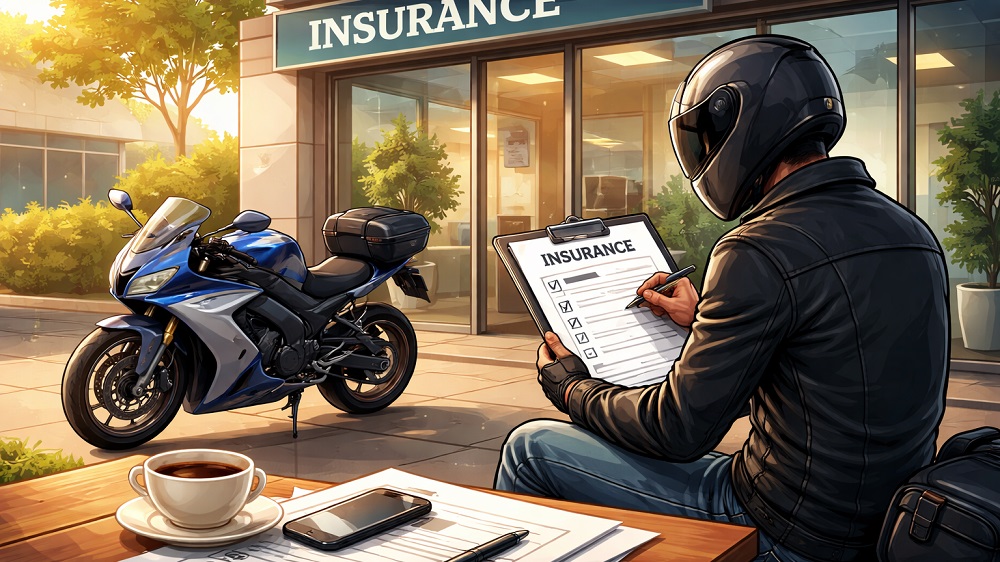
One day motorcycle insurance works in the same way as a standard annual policy, but with a clearly defined start and end date. Instead of covering you for a full year, the policy is only active for the exact period you select. You choose:
-
The start date and time
-
The end date and time
-
The level of coverage required
In practice, temporary motorcycle insurance functions as a short-term version of a standard policy, with the same core structure but limited to a fixed time period. Once the policy expires, coverage stops immediately unless a new policy is arranged. Once the policy reaches its end date, it automatically expires without renewal. Because the insurer is covering a very short period, the cost is calculated specifically for that timeframe rather than spread across a full year.
Important: Always check the exact start time of your policy. If your insurance begins at a specific hour (for example, 8:00 AM) and you ride before that time, you are not covered, even if it is the same day. This means you are only insured for the exact period selected, making it essential to ensure your coverage fully matches when you plan to ride.
Why and when use one day coverage?
Short-term motorcycle insurance is useful when riders don’t need year-round coverage.
Reason #1: Borrowing a motorcycle
Riding someone else’s motorcycle requires proper insurance, even for a short trip. While the owner’s policy is usually primary, coverage depends on whether you are listed as a named rider or allowed as a “permissive user.”
If you are not covered, riding without insurance can be illegal. In this case, a one day policy or non-owner insurance can provide the necessary protection.
Reason #2: Renting a motorcycle for travel
Most rental companies include insurance as part of the rental, typically covering liability. However, this may not include damage to the motorcycle unless additional cover is purchased.
For peer-to-peer rentals or shared bikes, insurance is usually included, but coverage levels vary. Always confirm what is included before riding.
Reason #3: Test riding a motorcycle
Insurance is still required when test riding a motorcycle. Dealerships may provide coverage for test rides, but this should always be confirmed. If buying from a private seller, you may not be covered at all. In this case, a one day insurance policy can protect you during the ride.
Reason #4: Seasonal riding
Some riders only use their motorcycles during warmer months. Seasonal policies allow riders to insure their bikes only during the months they ride.
Reason #5: One-time events or occasional riding
Short-term insurance is useful for group rides, rallies, or occasional trips. Some events require proof of insurance before participation. If you only ride occasionally, one day insurance allows you to stay covered without paying for a full annual policy.
Reason #6: Travel or storage periods
Motorcycle owners who store their bikes for long periods may temporarily cancel or suspend full coverage policies and purchase short-term insurance when they plan to ride again.
Types of short-term motorcycle policies
- Daily insurance – Covers a single day or a short ride. Often purchased through a rental company or online. Useful for a quick trip or ride.
- Weekly or monthly insurance – Provides coverage for a few weeks or months. Ideal for renters or travelers. Rates may be higher per day, but flexible if you only need, say, 2–4 weeks.
- Seasonal insurance – Covers only specific months during the riding season. Good for riders in cold climates who store bikes in winter. Often cheaper than annual rates.
- Storage insurance – Covers theft or damage while the motorcycle is stored, not being ridden. No liability for riding, but protects your bike from fire/theft while idle.
What coverage is typically included?
Short-term policies often include similar protections to standard motorcycle insurance. If you are renting a motorcycle, the included insurance may only cover liability, meaning you could still be responsible for damage to the bike unless additional cover is purchased. It’s important to check exactly what is included before riding.
#1 – Liability coverage
Liability insurance pays for injuries or property damage you cause to others in an accident. Most U.S. states require this coverage before a motorcycle can be legally ridden.
#2 – Collision coverage
Collision insurance helps pay for repairs or replacement if your motorcycle is damaged in an accident.
#3 – Comprehensive coverage
Comprehensive insurance covers damage caused by events other than collisions, such as theft, vandalism, fire, or natural disasters.
#4 – Medical payments coverage
Medical payments coverage helps pay medical expenses for you or your passenger after a crash.
#5 – Uninsured / Underinsured motorist coverage
This coverage protects you if another driver causes an accident but does not have sufficient insurance.
#6 – Accessory and Gear Cover
Some policies include helmets, riding gear, or custom parts
How short-term policies are normally structured
Temporary motorcycle insurance policies follow a fixed structure that differs slightly from annual cover:
-
Fixed term: The policy is only valid between the selected start and end dates
-
No automatic renewal: Coverage ends automatically without renewal
-
Limited extensions: Most short-term policies cannot be extended and a new policy must be purchased again
-
Short-term pricing: Costs are calculated for the exact duration, often resulting in a higher daily rate
How to get temporary motorcycle insurance
Temporary motorcycle insurance can often be obtained through several sources:
-
Rental companies: Many bike rental outfits offer daily insurance as part of the rental contract. This typically includes required liability and sometimes an optional collision waiver.
-
Independent agents/brokers: Some agencies specialize in short-term policies. They can shop around for a plan that lasts as long as you need.
-
Add to existing policy: For very short needs, such as a few days, another option is to have a friend add you temporarily to their existing policy when you borrow their bike. Or, if you own a bike, you could purchase a standard policy and cancel it later.
-
Non-owner Insurance: If you ride other people’s bikes often but never own one, a non-owner motorcycle policy (liability only) can be the solution. This way you stay covered for accidents without owning a bike.
You should compare quotes from multiple providers since short-term policy costs vary significantly depending on the rider history, motorcycle type, and location. Always ensure there is no gap between policies, as lapses in coverage can lead to higher premiums later.
Cost factors for one day motorcycle insurance
Short-term rates vary widely. In general, you can expect to pay more per day than an annual policy’s equivalent day-rate. Factors influencing the price include:
-
Your age and driving record: Younger or high-risk riders pay more. A clean history lowers cost.
-
Bike type and value: Powerful or expensive bikes cost more to insure. A 125cc motorbike is cheaper to cover than a 1000cc racing bike.
-
Duration of coverage: Longer short-term periods may lower the daily rate. 1 day insurance is pricier per day than a week or month plan.
-
Coverage limits: Higher liability limits or adding collision/comprehensive cover will raise the premium.
-
Location: Insurance in high-accident or high-theft areas such as Florida or California is higher.
Here’s a good point of reference. The average full coverage motorcycle insurance in the U.S. costs about $33 per month or $399 per year. Short-term policies will often exceed that daily rate, but since you ride less, overall expense can still be lower than a full-year policy.
When a short-term policy isn’t ideal, some limitations
If you ride regularly, a standard yearly policy with seasonal billing might be cheaper. Temporary insurance is best for clear, short periods of riding. Also, not all insurers allow renewal of multiple short-term policies back-to-back. Sometimes it’s better to switch to a full policy if you end up needing coverage all year.
While one day motorcycle insurance offers flexibility, there are some important limitations:
-
Gaps in coverage can increase future premiums: Insurers may view gaps as higher risk behavior
-
Back-to-back short-term policies are not always allowed: Some providers restrict repeated short policies
-
Coverage is only valid within your selected dates: Riding outside that period means you are uninsured
-
Availability is limited: Not all insurers offer true one-day or short-term motorcycle insurance
- Short-term policies can sometimes have stricter underwriting rules: Not all riders or motorcycle types will qualify
Frequently asked questions
Can you get one day motorcycle insurance?
- Yes, but it is not widely offered by major insurers. Most short-term cover is arranged through rentals or brokers.
Is one day insurance cheaper than annual insurance?
- It can be cheaper overall if you ride rarely, but more expensive per day.
Does one day insurance include full coverage?
- Not always. Many policies only include liability unless additional cover is added.
Is one day motorcycle insurance always available?
This type of insurance is not widely offered by most major insurers. In many cases, it is accessed through rental providers, brokers, or specialist insurers rather than being purchased directly as mentioned before.
Because of this, availability can be limited depending on your location, age, and type of motorcycle.
Final thoughts

One day motorcycle insurance offers a flexible and practical solution for riders who don’t need full-time coverage. Whether you’re renting, travelling, or riding occasionally, short-term insurance allows you to stay protected without committing to a full-year policy.
Understanding the different policy types, limitations, and costs is essential to ensure you choose the right coverage for your needs. As long as you understand how the policy works, what it covers, and exactly when it starts and ends, it can be a practical and cost-effective way to stay insured for short-term riding.
Thanks for reading and be sure to check out all our other articles for more bike insurance related tips and information!