
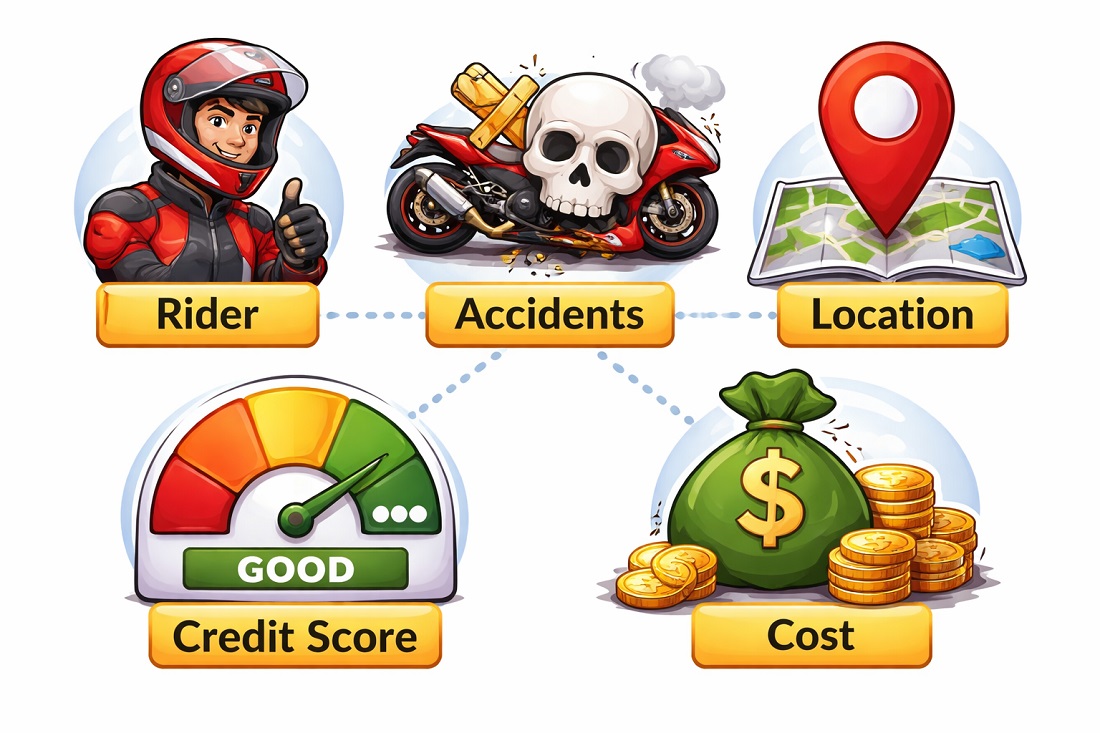
Key takeaways
- Rider profile: Age, riding experience, and driving history all play a major role. Younger and less experienced riders usually pay more.
- Motorcycle: Engine size, bike type, and value affect your premium. High performance bikes are more expensive to insure.
- Location: Where you live influences your rate. Areas with more accidents or theft tend to have higher premiums.
- Coverage levels: Higher limits and more comprehensive cover increase the cost of your policy.
- Credit profile: In many states, your credit history can affect how much you pay for insurance.
- Usage: How often and how far you ride can change your quote, especially if you use your bike for commuting.
Rider factors
- Age: Younger riders are generally seen as higher risk. Premiums often decrease as you gain experience.
- Driving record: Accidents, violations, or serious offences can increase your insurance costs.
- Riding experience: Riders with more years on the road and fewer claims usually pay less.
- Insurance history: Continuous coverage without gaps can help lower your premium.
- Credit profile: Lower credit scores may result in higher quotes in many states.
Bike and vehicle factors
- Engine size: Larger engines usually come with higher premiums, while smaller bikes are cheaper to insure.
- Value: New or high value bikes cost more to insure than older or lower value models.
- Model type: Performance and racing style bikes tend to have higher insurance costs than standard cruisers.
- Accessories: Custom parts increase the value of your bike and can raise your premium if they are included in your cover.
Location
- State laws: Minimum coverage requirements vary by state, which affects base pricing.
- Regional risk: Areas with more traffic or higher theft rates typically have higher premiums.
- Local area: Even within the same state, urban areas often cost more to insure than rural areas.
To understand how location and regulations influence insurance pricing, refer to.
Coverage choices
- Liability limits: Higher limits increase your premium but provide more protection.
- Collision and comprehensive: Adding these options can significantly increase the total cost of your policy.
- Deductible: Choosing a higher deductible can reduce your monthly premium.
- Optional add ons: Extras like medical cover, roadside assistance, and gear protection all add to the cost.
Discounts that can lower your quote
- Safe rider discounts: Completing an approved rider training course can reduce your premium.
- Multi policy discounts: Bundling your motorcycle and car insurance with the same provider can lower costs.
- Multi bike discounts: Insuring more than one motorcycle with the same company can lead to savings.
- Security features: Anti theft devices and secure parking can help reduce your premium.
- Student discounts: Younger riders with good academic performance may qualify for lower rates.
Every insurance quote is based on a mix of personal details, your bike, and how you use it. Small changes like improving your driving record, adjusting your coverage, or comparing providers can make a noticeable difference in what you pay.